Robot Olympics 2025: Physical Intelligence's Vision-Language-Action Model Revolutionizes Household Robotics
Dec 24, 2025
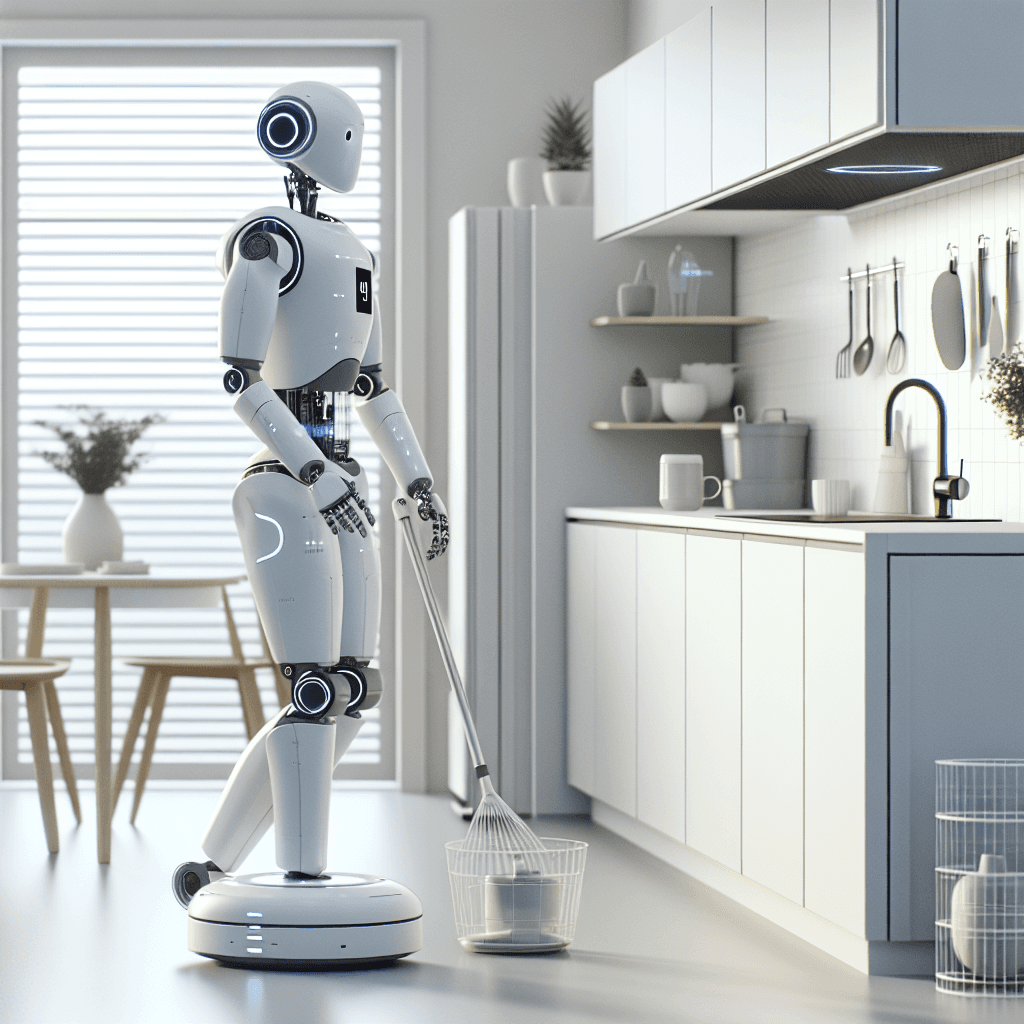
The dream of robots seamlessly performing household chores has long captured imaginations, but practical, reliable progress has remained elusive. In 2025, Physical Intelligence (PI) is pushing this frontier forward with an innovative benchmark called the Robot Olympics, focused squarely on real-world household tasks. This initiative uses their π0.6 “generalist” robot model a vision-language-action (VLA) policy that functions like a large language model (LLM), translating visual inputs and natural language instructions into robotic actions.
What is the Robot Olympics?
Unlike traditional robotic challenges that emphasize controlled lab puzzles, PI designed the Robot Olympics as a high-stakes test of everyday chores. The competition applies consistent constraints and scoring to tasks such as:
Navigating a lever-handle self-closing door without getting trapped
Turning a sock inside-out despite gripper hardware limitations
Precision key insertion and turning in locks
Washing a greasy frying pan using soap and water
Opening thin, deformable plastic bags that obstruct sensors
What makes this challenging is not just the task complexity but the robot’s need to adapt autonomously, decomposing tasks and recovering from failures without human intervention. Videos show that each run is fully autonomous, highlighting the robustness and adaptability PI is striving for.
Why the Robot Olympics Matter
This benchmark represents a milestone by converging two previously distinct worlds:
Benchmarks that align with real-life complexity, moving from robotic puzzles to practical household chores
Foundation-model scaling approaches, which train a large generalist model and adapt it with fine-tuning for various tasks instead of building bespoke policies for every object or action
PI’s research reveals promising results in human-to-robot knowledge transfer - a form of training where robots learn from human egocentric video footage. By aligning human video data with the robot's sensory and motor experiences, PI has demonstrated nearly twofold improvements in robot generalization on complex, contact-rich tasks. This suggests that the future data driving robot training might not rely exclusively on robot hours but increasingly on diverse human video data.
Challenges and Realism in Robot Deployment
Despite impressive demonstrations, there are important caveats:
Brittleness: Success depends heavily on environment factors such as lighting, object arrangement, and subtle material conditions like sponge wetness.
Hardware limitations: Some failures are purely physical, such as gripper size confounding precise manipulation.
Benchmark incompleteness: Repeatability across varied trials and real home environments remains challenging and critical for production use.
This underscores that the Robot Olympics are a progress indicator, not a product launch, highlighting how far we have come and how far remains.
The Broader AI and Robotics Landscape in 2025
PI's Robot Olympics arrives alongside significant developments in AI and robotics:
Neurable raised $35 million to develop wearable “brain AI” interfaces, enabling hands-free control through intent and attention signals.
Salesforce quietly added 6,000 enterprise AI customers in one quarter, signaling robust AI adoption in business.
China advances its AI chip “Manhattan Project,” aiming to build custom AI silicon by 2028.
Physical Intelligence’s approach - merging scalable foundation models and human video fine-tuning - could motivate a new wave of robotic skill acquisition that accelerates progress beyond lab constraints.
How Leida Can Help Businesses Stay Ahead
Just as PI redefines robot learning through foundation models, businesses today can benefit from AI-driven automation for efficiency and innovation. At Leida, our AI consulting services help identify hidden bottlenecks and implement AI solutions tailored for unique operational challenges.
A similar mindset of leveraging foundation models, structured workflows, and continuous learning applies to transforming business processes, particularly when integrating AI tools that align tightly with company needs.
If you’re curious how AI could uncover hidden bottlenecks in your workflows, book a call with our team below.
Book Discovery Call