How Disney’s Walking Olaf Robot Redefines AI-Powered Temperature Management in Robotics
Dec 22, 2025
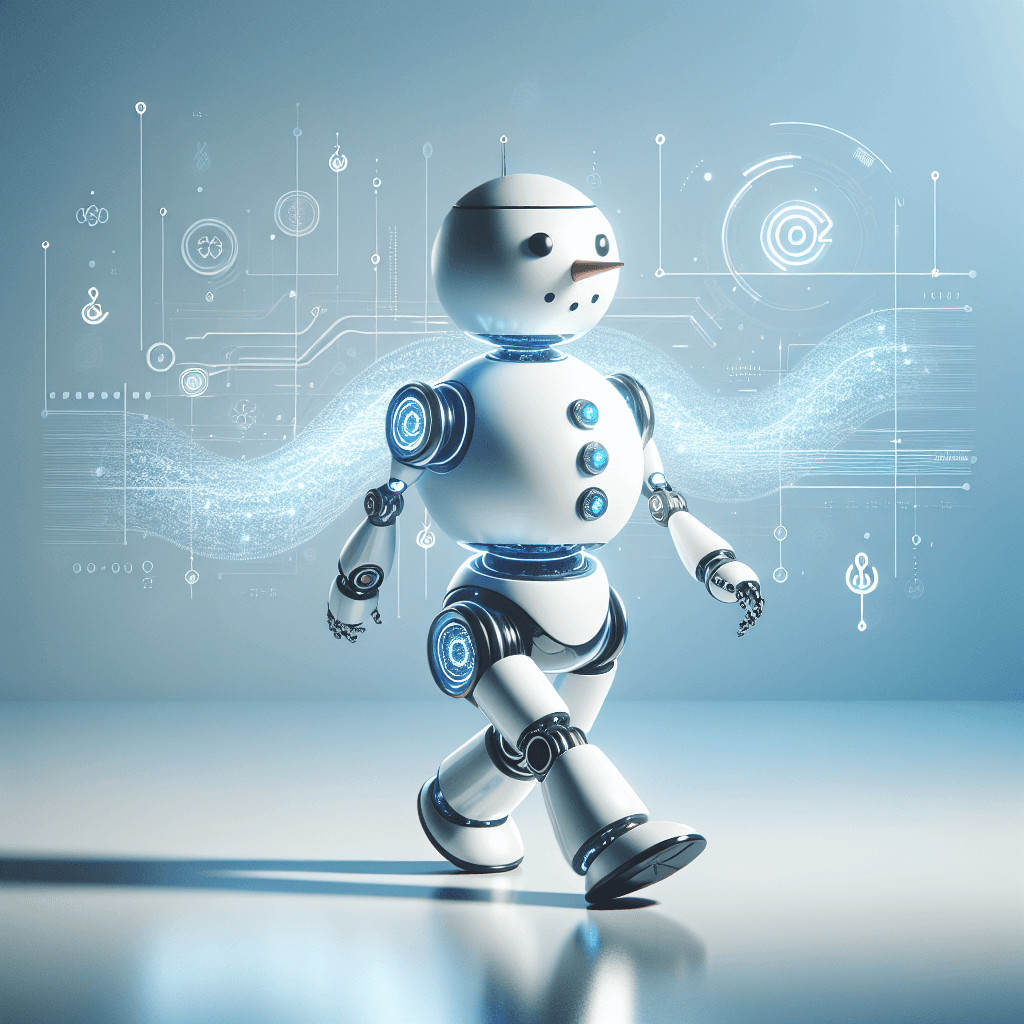
Disney’s latest breakthrough in robotics is nothing short of magical: a walking Olaf robot from Frozen that has taught itself to prevent overheating, solving a notoriously difficult engineering challenge. This innovation showcases how AI can enable robots to self-regulate complex physical conditions, opening new avenues not only in entertainment but also in broader robotics applications such as prosthetics, drones, and space exploration.
The Challenge of Building Olaf: Defying Robotics Norms
Olaf’s character design posed unique obstacles. Standing nearly 3 feet tall and weighing about 32.8 pounds, Olaf features a disproportionately large head atop a slender neck with small actuators encased in a heat-trapping costume. Traditionally, such an unstable design in robotics would be prone to overheating and mechanical failure, especially due to the high torque motors must exert to maintain movement and expression.
Innovating AI-Driven Thermal Management
To tackle this, Disney Research turned to a sophisticated AI approach designed to monitor and control thermal stresses in real time:
Thermal Modeling: They developed a mathematical model linking motor torque with temperature increase, showing temperature rises proportionally with the square of the torque.
Sensor Integration: The robot continuously inputs actuator temperature alongside other sensor data to gauge its internal thermal state.
Control Barrier Functions: These act as "soft limits" within the AI, prompting it to adjust its actions proactively before temperatures reach dangerous levels (specifically before an 80°C threshold).
Adaptive Behavior: Olaf’s AI reduces motor torque and subtly shifts the head position, balancing expressiveness with heat management.
This blend of control theory and AI forms an intelligent, predictive system that anticipates overheating and takes preemptive action without compromising performance.
Additional Technical Innovations
Asymmetric Hidden Legs: Olaf’s legs are mirror-inverted to avoid internal collisions, cleverly hidden under a foam skirt that creates the illusion of floating snowball feet.
Remote Actuation: Motors are placed strategically away from joints, connected via spherical and four-bar linkages to achieve natural movements.
Silent Stepping: An AI reward system reduces footstep noise by about 13.5 decibels, preserving the illusion and immersion.
Magnetic Breakaways: Components like Olaf's arms, nose, and hair detach on impact to avoid damage and allow for amusing interactive gags.
Broad Implications for Robotics and AI
Disney’s AI-driven thermal regulation innovations represent more than just theme park marvels. Any robotic system with heat-sensitive parts in confined spaces faces similar challenges. This technology exemplifies how "reward functions" in AI can replace rigid hard-coded limits, enabling machines to self-manage physical stress intelligently.
For example, prosthetic limbs, service robots, and drones operating in extreme environments could leverage this approach to prolong operational longevity and safety. Research in AI-powered thermal management is growing rapidly, with a 2025 review highlighting similar strategies being explored in industrial and aerospace robotics applications to reduce hardware failures linked to heat.
The Bigger Picture in AI Robotics for 2025
This breakthrough coincides with other groundbreaking AI trends in 2025, such as OpenAI's advancements in AI model efficiency and cloud computing, new regulatory frameworks like New York's RAISE Act for AI safety, and provocative paradigm shifts identified by AI thought leaders.
At Leida, we recognize how AI innovations in robotics and efficiency directly relate to optimizing workflows and managing physical and computational resource limitations effectively.
If you’re wondering how automation could unlock more growth, book a quick call with us today.
Book Discovery Call